
Read CHB’s New Changes Allowed in Structure of Chandigarh Houses
The recent announcement by the Chandigarh Housing Board (CHB), giving a nod to 28 need-based changes, has brought cheer to thousands of city residents living in the CHB-allotted dwelling units bringing down the Damocles’ Sword that had been hanging over their heads for decades now. However, these path-breaking relaxations have come with certain riders.
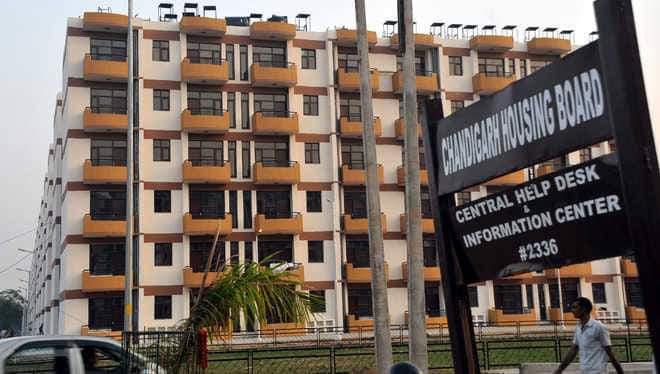
The Chandigarh Administration has outrightly rejected their long-standing demand for a one-time settlement formula on the ‘Delhi pattern’. The hassled house owners had been reiterating their demand for regularisation of certain need-based changes. 20 per cent of the total city populace resides in the CHB-allotted houses.
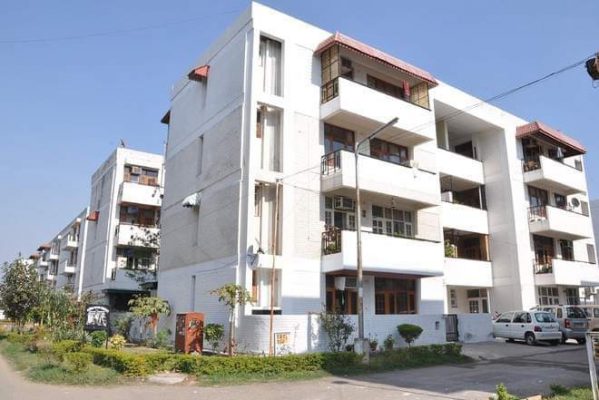
The relaxations
Construction of balconies is allowed in the dwelling units projecting three feet along the total width of the courtyard, both on front and rear sides. However, no balcony is permissible on its façade where it already exists.
‘Chhajjas’ (sun shades) over their doors and windows allowed provided they conform to the standard pattern and material such as fibre glass. What is mandatory is the projection shouldn’t exceed one and a half feet of the face of the wall.
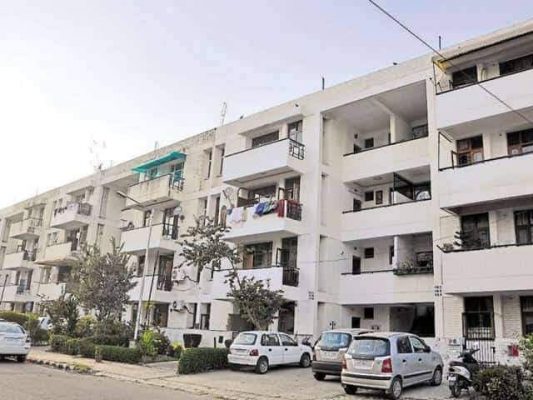
When it comes to paint treatment of the outer surface of a building, uniformity of colour pattern will be mandatory to maintain by the allottees. As regards tile work in flats, it will be allowed on the main entry point, in the independent tenements, tile work will be allowed only if the same is within the building line and a 9-inch common wall is left as a common band between blocks.
Also READ: CHB House Owners Can Now Make Internal Changes, Build Elevators, Without Approval
The new order allows the allottees to go for the desired internal changes in their respective flats without seeking prior approval of the CHB. However, the intended changes/ alterations shall be subject to the condition of certification of structural safety and, of course, an undertaking that there would be no change in the exterior face of the building.
Discretion of constructing an additional door in their dwelling units with no door opening onto the open space, right of way of the road, pavement, green and reserved public spaces, outside the plotted area, et al.
Construction of an additional 150 sq ft or 75 per cent of the area in the rear courtyard/terrace, etc. However, those occupying more than one floor of the dwelling units are allowed to take the advantage of additional construction in one floor level only.
The lowering of window sills measuring up to four inches above floor level, the provision of 1m x 1m cut-out in common area roof slab to access tanks, solar heating mechanism, and antennas, widening of the main up to 12 feet and up to 6 feet in height, solar panels on terrace subject to consent of all allottees of block, rainwater spout in balconies connected with single pipe, not to be exposed on to street.
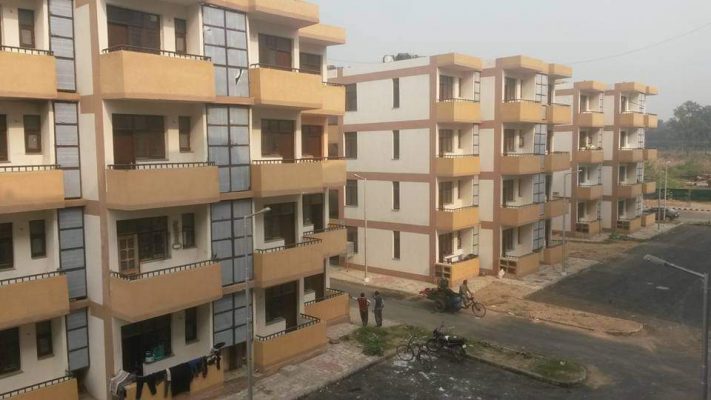
The Administration has gone a step ahead to allow relief to specific category of allottees, which includes the coverage of corridor area adjoining the HIG flats (Upper) category in Sector 45-A under the new order. The same will be allowed only on submission of mutual consent of all the allottees in the specific block.
Under the provision, the allottees of HIG (Upper)-Cat-I, HIG (Upper), HIG (Lower)-Cat-II-Type-A, HIG (Lower)-Cat-II-Type-B of Sector 45-A and 39-B, are allowed to use the roof of the parking space on first floor level as terrace by converting the window abutting this terrace into a door with the provision of a four-foot-high MS railing. This is also subjected to the mutual consent of the upper floor allottees.
However, in the HIG flats (Lower)/Cat-II in Sectors 47-C, 45-B, 41 and 38-A, the administration has allowed coverage of the void in front of the window facing the front bedroom on all floors up to the area of the duct, coverage of which has been disallowed.
For the owners of LIG (Upper) duplex units in Sector 41-A, extending the width of the room by two feet (appx) in the rear courtyard has been allowed. They would be within their rights to convert the terrace on the first floor into a glasshouse while those on the second floor into a terrace garden.
About 115 mm (4 ½ inch) walls inside apartments can be removed if owner intends to consolidate spaces. Walls thicker than this, being load bearing, shall not be demolished. In independent houses, removal of wall thicker than 115 mm (4½ inches) may be permitted subject to submission of certificate of structural stability from empanelled structure engineer of Chandigarh administration.
Additional windows are allowed in end walls of dwelling units, only as per sizes and locations indicated in two dimensional drawings posted on CHB’s web page. Mutual consent of allottees of floor abutting the additional construction is mandatory. Prior to the commencement of construction, allottees are required to deposit fee at ₹200 per square ft + GST.
Up to 1,000 litre increase in total capacity of water tank for all
Width of main gate can be increased up to 12 feet and height up to 6 feet; 10-ft wide gate in side/rear boundary wall of rear courtyard abutting V-5/V-6 roads, not on V-3/V-4 roads; Flexible/sliding gates in front courtyard’s brick boundary wall on front
Car shed with steel pipe frame, sheet/fibreglass cover with transparency within boundary wall
Rainwater spout in balconies connected with single pipe; shouldn’t be exposed on to street
Solar panels on terrace subject to consent of all allottees of block
1m x 1m cutout in common area roof slab to access tanks, solar heating systems, antennas is allowed now
The CHB notification follows the recommendations of the core committee constituted in Sept 2021 to look into the nitty-gritty of the need-based changes, which were submitted for approval in July 2022. The Administration gave its nod to the recommendations in November 2022, offering a major relief to more than 4.5 lakh residents living in the CHB-allotted houses in Chandigarh.
Saving Corbusian Chandigarh: Independent Houses cannot be Converted Into Floor-Wise Apartments in Sectors 1-30
Le Corbusier, the original architect of Chandigarh, in his edict of Chandigarh which he had laid down famously said, “The seed of Chandigarh is well sown. It is for the citizens to see that the tree flourishes.” And truly fulfilling his hope are some of the old residents of Chandigarh who went till the Supreme Court to maintain the sanctity of the city.
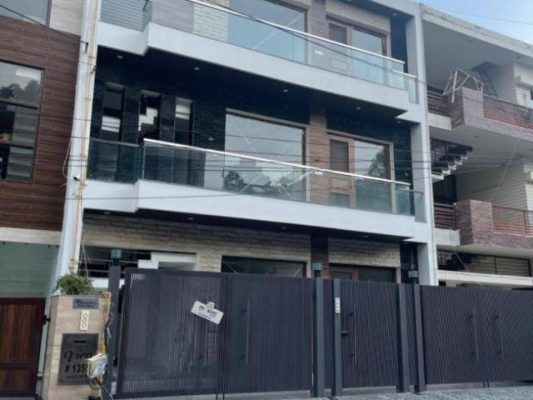
In a much welcome move for city residents, the Supreme Court has prohibited the conversion of residential houses into floor-wise apartments in Sectors 1 to 30 in Chandigarh, citing heritage status of Le Corbusier zone. Let us deconstruct the issue and find out what lies at the heart of the matter:
Supreme Court observations
-
- A bench of Justices B R Gavai and B V Nagarathna slammed the Chandigarh administration for “blindly sanctioning” building plans in which one dwelling unit is being converted into three apartments.
- Such a haphazard growth may adversely affect the heritage status of phase-I of Chandigarh (Sectors 1-30)which is sought to be inscribed as a UNESCO’s heritage city.
- In our view, this would amount to permitting something indirectly which is not permitted directly.
- The adverse effect on traffic, which would result as a result of converting one dwelling unit into three units, has not been addressed.
- contrary to the Chandigarh Master Plan (CMP) -2031 itself “The fragmentation/apartmentalisation of single dwelling units in phaseI of Chandigarh, in our view, will injure the ‘Lungs’ of the city as conceptualised by Le Corbusier”
The Verdict
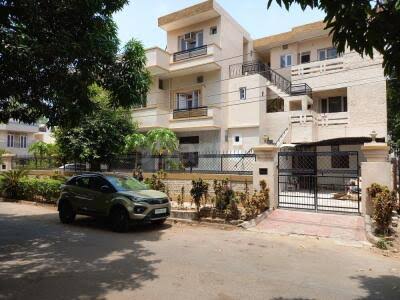
- “In that view of the matter, we hold that in view of Rule 14 of the 1960 Rules (Chandigarh (Sale of Sites and Building) Rules 1960), Rule 16 of the 2007 Rules and the repeal of the 2001 Rules (Chandigarh Apartment Rules, 2001), fragmentation/division/ bifurcation/apartmentalisation of a residential unit in phase-I of Chandigarh is prohibited”
The bench said till a final decision is taken by the Centre, the Chandigarh administration shall not sanction any plan of a building which ex-facie appears to be a modus operandi to convert a single dwelling unit into three different apartments occupied by three strangers. The heritage conservation committee will reconsider its clauses on apartmentalization and present it to the Centre.
-
-
- Till the Centre takes a final decision, no Memorandum of Understanding (MoU) or agreement or settlement amongst co-owners of a residential unit shall be registered nor shall it be enforceable in law for the purpose of bifurcation or division of a single residential unit into floorwise apartments.
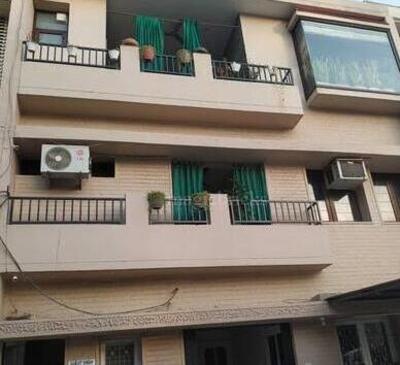 Representational Photo
 -
What the SC ruling means
Chandigarh Administration will freeze FAR (floor area ratio) and shall not increase it any further. This means that no change will be made in the open and covered area ratio, no construction will be allowed in covered area. Neither the administration nor the central government can increase it.
The number of floors in phase-I shall be restricted to three with a uniform maximum height as recommended by the Heritage Conservation Committee.
The Chandigarh administration shall not formulate rules or bylaws without prior consultation of the Heritage Conservation Committee and prior approval of the Centre.
“The SC ruling has come as a solution to many problems, it will prevent additional pressure on infrastructure , drainage, sewerage, population density. Nobody will try to tinker with the architectural design of City Beautiful,” says Ajay Jagga, Advocate, Punjab & Haryana High Court.
What is Chandigarh Heritage Conservation Committee?
It is an expert committee formed by the ministry of Home affairs, government of India, to advise the Chanidgarh administration on matters related to identification, protection, conservation and maintainance of Chandigarh’s heritage. With the UT Advisor as its head, its members include UT home secretary, finance secretary, representative of ministry of Home Affairs and ministry of culture, New delhi, MC commissioner, UT estate officer, UT chief architect, UT chief engineer, representative of Archaeological survey of India, among its 18 members. The committee dwells on the preservation of the architectural or immovable heritage of Chandigarh. The committee meets 2-3 times in a year. There is another committee called the HIPC, Heritage Items Protection Cell, which is responsible for the preservation of movable property.
What is Chandigarh phase I?
Chandigarh was made a Union Territory (UT) and became the capital of Punjab and Haryana in 1966. The city was developed in two phases ― Phase I consisting of Sectors 1 to 30, and Phase II consisting of Sectors 31 to 47. Le Corbusier had designed and planned the city from Sectors 1-30 which was to be developed as a low density area. In the masterplan, this area which covers around 9,000 acres of land was meant for 1.50 lakh people with one acre meant for 16 people only.
Phase I was designed for low-rise plotted development while Phase II sectors were expected to have a much higher density..
The redensification of sectors 1-30 has been mulled by the Chandigah Administration. The Chandigarh Heritage Conservation Committee will consider the issue of redensification in these sectors. After that the UT administration will consider amending the Chandigarh Master Plan-2031 and the 2017 apartment rules in accordance with the recommendations of the committee. Any amendments will have to be placed before the central government for approval.
What it means for builders/ realtors/ property dealers
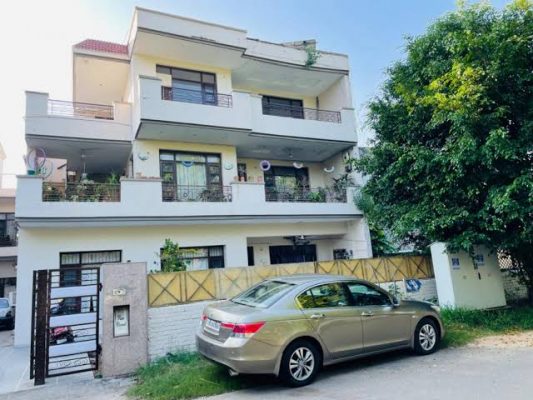
Around 1,000-odd property owners who had either entered into agreements with co-owners or registered with the UT estate office to sell the property stand affected as their agreements have been declared null and void. 900 property owners have registered with the UT estate office to sell the properties but now they cannot do so. Around 100 property owners had entered into agreements, memoranda of understanding and settlements, which have been declared null and void after the Apex Court ruling.
Property rates in sectors 1-30 will reduce drastically and also make it difficult for buyers to get bank loans for purchasing property in these sectors. Property dealers are apprehensive that no buyers will come in these sectors, people would prefer Mohali and Panchkula. “There will be no floor-wise registry of property, in family-owned property, share wise distribution is allowed but if one has to sell the property, the entire property has to be sold to one person, this will go beyond the reach of potential buyers,” says Jaswinder, property dealer.
“The property rates in Mohali will increase by about 10-15 pc. Builders will not venture out to buy property in Chandigarh, city residents will also be fearful of selling property to realtors,” he says.
According to petitioners who were represented by senior lawyer PS Patwalia in the case, there are around 60,000 houses in Sectors 1 to 30 and 10% of these have already been converted into apartments and sold further, but the UT administration had found only 900 property owners i.e. those who had registered with the estate office.
Time line of the legal row
2001: Apartment rules were introduced in Chandigarh whereby single residential units could be sub-divided into apartments..
2006: City residents and Chandigarh’s chief architect MN Sharma met UPA chairperson regarding the issue
2007: Apartment rules taken back
2016: Sector 10 Residents’ Welfare Association (RWA) filed a petition in the high court, got limited relief. Indirectly people still kept selling and purchasing property. Realtors purchased properties, demolished old houses, constructed apartments and sold them according to shares– ground floor is considered 50 pc share, first floor 30 pc share and second floor 20 pc share. So, the RWA knocked the doors of the Supreme Court.
2022: Punjab and Haryana High Court ruled that residential plots in Chandigarh can have multiple shareholders, even outside the family. It was this order that has been challenged by the RWA in the Supreme Court as it had come to light that between 2016 and 2019, as many as 891 sale deeds were registered by the Estate Office, wherein a part of the property was sold outside the family.
The Real hero
The man who took up the cudgels to fight the Estate office-Builder nexus is Col Kulwinder Singh (retired) 76, president of the Residents’ Welfare Association (RWA), Sector 10, Chandigarh, who has been living in Chandigarh since 1954. He has said that the motive behind the seven-years’ long legal battle was to save the character of City Beautiful as it was envisaged by Le Corbusier. In his fight to save the heritage of the City Beautiful was ML Sarin, secretary general, Sarin Memorial Legal Aid foundation, has been living in Chandigarh since January 1955 and was also a party in the case.
CII Chandigarh Suggests Integrated Tourist Circuits, New Tourism Products to Tap G 20 Benefits
With India bracing itself to host the G 20 final summit at New Delhi in 2023 and the other meetings and seminars in various cities of India, the Ministry of Tourism, Government of India, is leaving no stone unturned to tap the benefits of the G 20 summit.
With the Tourism ministry going whole hog to showcase India to the world, it will hold the country’s first Global Tourism Summit in New Delhi from 10-12 April 2023 where all G-20 member countries will send their representatives.
With CII being the Industry partner for this event, CII Northern Region Headquarters, Chandigarh, held a roadshow in Chandigarh along with the Tourism Ministry officials of states in the Northern Region .
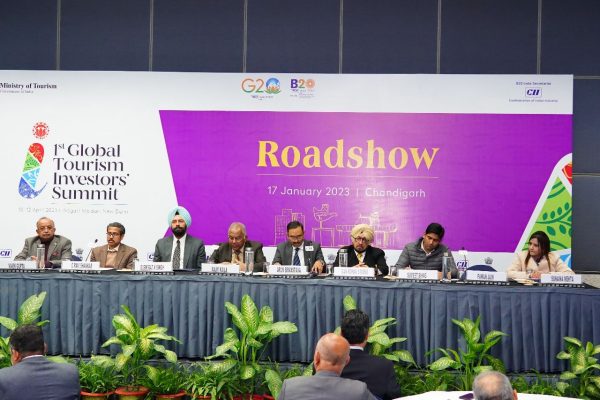
The emphasis was on how G-20 will be the Union Tourism Ministry’s main focus in 2023 to establish the country as a key tourism destination during its year-long leadership.
What is the tourism potential of Chandigarh?
Talking in the context of the City Beautiful, Rajiv Kaila, Chairman, CII Chandigarh said, “Chandigarh must explore collaboration with neighbouring states to create integrated tourist circuits that will mutually benefit the tourism growth of destinations in both states. There will need to be a focus on creating new tourism products that are oriented towards promoting lifestyle tourism to make it appealing for all segments.”
“Chandigarh has a significant potential in religious tourism, eco-tourism, and tourism driven by the IT & education sector,” said Sumeet Sihag, Director, Industries, Chandigarh Administration. Sharing the UT Administration’s perspective, he said that the growth objectives that can be achieved through tourism include employment generation, attracting private investments, preserving heritage and tradition, preserving the environment, diversifying tourism products into sports, entertainment, and leisure activities, developing resources for hospitality, etc.
Selling India’s tourism industry
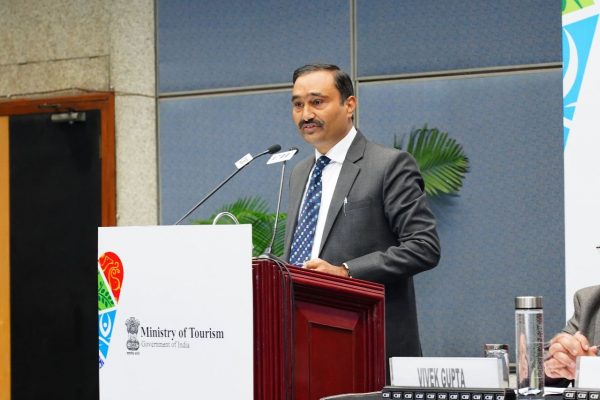
“The summit will showcase various opportunities for investment and trade in the hospitality sector. This will allow global visitors to explore Indian tourism products and services that will provide an opportunity to the local players to cater to the global demand and compete in this sector,” said Arun Srivastava, Deputy Director General, Publicity, Ministry of Tourism, Government of India.
Stating the government’s target for 2030, Srivastava said, “Pre-pandemic, foreign tourist arrivals in India touched 11 million and the forex generated was Rs 2 lakh crore, providing over 13% direct and indirect jobs in the country. By 2030, we are aiming at a forex contribution to GDP of $ 56 billion that will generate 140 million jobs.”
Exploring new tourism initiatives in Punjab
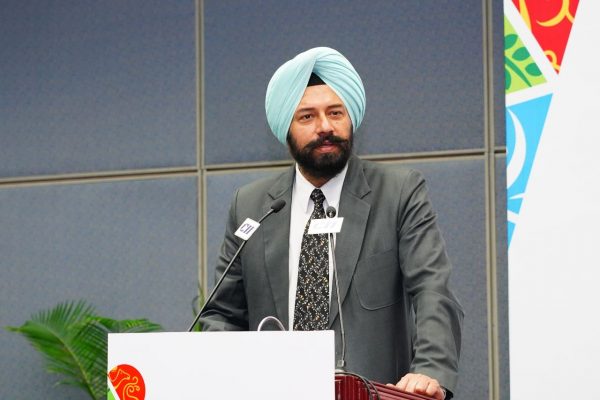
Talking about the various schemes offered by the Government of Punjab, Gurkirat Kripal Singh, Secretary, Tourism & Cultural Affairs, Government of Punjab, said, “As the gateway of the nation for Central Asia, a lot of cultural exchange of significant historical value has happened in Punjab. The Government of Punjab is embarking on a series of new initiatives to achieve the ends from the point of view of Punjab.” Of Punjab’s upcoming initiatives, adventure tourism, water tourism and caravan tourism topped the list, he said.
Woman Mountaineer Baljeet Kaur Who Scaled Heights of Human Endurance
When your grit is as firm and high as a mountain, you will overcome every challenge and make your way to reach the summit. One such person, and that too a woman, who has scaled many peaks and mountains and her ‘dil maange more’ attitude doesn’t let her stop is Baljeet Kaur from Solan district in Himachal Pradesh.
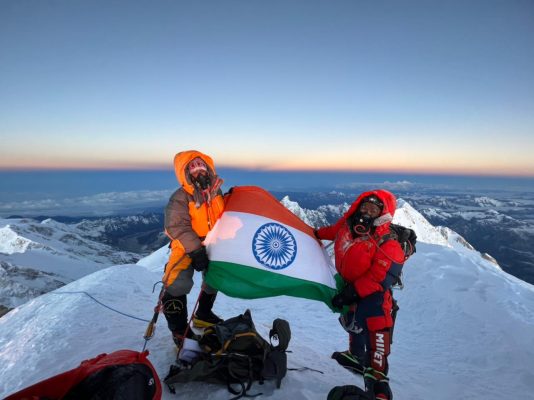
She climbed the Mt Everest solo along with her guide Mingma Dai on May 21, 2022. From April 28 to May 28, 2022, she climbed five peaks back to back and broke many records.

The initiation into mountaineering
What started as a routine enrolment in NCC, led her to be trained vigorously for the first girls’ expedition to the Mt Everest, the highest mountain in the world. While in college, she registered for the first all-girls expedition to Mt Everest. Only two women had to be selected from her college for the final expedition. She was weak to the bone, selectors rejected her, she did not give up, built her body by training herself in ground clearing, pushups, pullups and eating wholesome. She still failed to get selected, only two girls had to picked, they were already selected. Mountaineer Baljeet persisted with the selectors, so they kept her in reserve in case any one of them drops out. Fortunately, one of them backed out, Baljeet was in. Now, her training at the HMI (Himalyan Moutaineering Institute), Darjeeling, started where 100 girls were chosen for the training and only forty got selected for the expedition.

Apart from being born in a hilly state, she did not have any exposure or inclination or inspiration to climb snow-capped mountains and risk her life. What was it that pushed Baljeet to participate in Mt Everest expedition? At that point, she just thought of it as a route to get access to a government job, earning money for the family and make herself and her siblings complete their education.
Daughter of a retired bus driver who is a small farmer now, this is what she longed for. If you thought this is the end of the story, she scaled Mt Everest and her story is over, you are wrong. This was her first exposure to the mountains and the first expedition straight to the Mt Everrst, might be good luck, you might think. Yes, she was a part of the first all-girls expedition to the Mt Everst, but among all other girls, she was the only one who could not reach the top as she fell 300 mt short of the summit, her oxygen mask stopped working, ice had set in inside, the guide put in some hot water which stiffened the ice more, she had to return back without reaching the summit. Now, Mountaineer Baljeet became more fierce in her determination and she said to the mountain: you failed me, now I will fail you, I’ ll come back. Her small time ambition of getting a government job lay dead.
This was in 2016, and she promised the mountain she’ ll be back in 2020. The next three years she did not climb any mountain, she did small jobs to sustain her family, worked as a guide in trekking expeditions, undertook ski courses, group treks, expeditions etc and waited for her chance to again climb the mountains. Her chance came in 2021 in the form of the Mt Everest Massive expedition in which not only the Mt Everest but four other peaks had to be scaled by a group of six men and six women who were selected for different peaks-Mt Everest 1 man & 1 woman, Mt Lhotse 1 man & 1 woman, Mt Nuptse 2 women &2 men; Mt Pumori 2men &2women. Mountaineer Baljeet Kaur was selected for Mt Pumori and because first Indian woman to climb it and after this she climbed Mt Dhaulagiri (8167m) and again become the first woman from India to climb it.
Then, there was no looking back, she climbed five peaks back to back within 30 days all of which were above 8,000 mt. above sea level in a month, including the informidable Mt Everest which she scaled solo along with her guide Mingma Dai on May 21, 2022.
From April 28 to May 28, 2022. She broke many records — Mountaineer Baljeet Kaur the first only Indian who climbed Mt Annapurna, Mt Kanchenjunga, Mount Everest, mount Lhotse and mount Makalu in 30 days. After this, she climbed Mt Manaslu 8163m without oxygen mount and become first Indian woman to scale this peak.
CityWoofer in a tete-tete with the mountain girl Baljeet Kaur
After scaling so many peaks and breaking so many records, did you get any support from the state or central govt?
Unfortunately, no. I feel there has been some dearth of efforts on my part only, that the government has never got in touch with me for any kind of help or even appreciation. In the neighbouring states like Punjab and Haryana, sportspersons are encouraged and helped so much financially. I belong to Himachal, and union youth affairs and sports minister Anurag Thakur is from my state. Because I belong to a hill state, people think its natural for me to be a good mountaineer but they forget the climatic conditions we face on snow- covered mountain peaks are not natural conditions meant for humans.
| Sr. No. | Mountain Peak Name | Height (masl) | Expedition Region | Year |Summit | Reached Upto |
| 01 | Mt. Deo Tibba | 6,001 m | Himachal 2015 Summit |
| 02 | Mt. Trishul | 7,120 m | Uttarakhand 2015 Reached 6,350m |
| 03 | Mt. Everest | 8,848 m | Himachal 2015 Summit |
| 04 | Mt. Friendship | 5,320 m | Himachal 2017 Summit |
| 05 | Mt. Kolahoi | 5,425 m | J&K 2019 Reached 4,982m |
| 06 | Mt. Tuliyan | 4,250 m | J&K 2019 Summit |
| 07 | Mt. Pataslu | 4,220 m | Himachal 2019 Summit |
| 08 | Mt. Trishul | 7,120 m | Uttarakhand 2019 Summit |
| 09 | Mt. Lobuche | 6,119 m | Nepal 2021 Summit |
| 10 | Mt. Pumori | 7,161 m | Nepal 2021 Summit |
| 11 | Mt. Kun | 7,077 m | Ladakh 2021 Summit |
| 12 | Mt. Dhualagiri | 8167 m | Nepal 2021 Summit (1 October,2021) |
| 13 | Mt. Annapurna | 8091 m | Nepal 2021 Summit (28 April,2022) |
| 14 | Mt. Kanchenjuga | 8586 m | Nepal 2022 Summit (12 May,2022) |
| 15 | Mt.Everest | 8848 m | Nepal 2022 Summit (21 May,2022) |
| 16 | Mt. Lhotse | 8516 m | Nepal 2022 Summit (22 May,2022) |
| 17 | Mt. Makalu | 8463 m | Nepal 2022 Summit (28 May,2022) |
| 18 | Mt. Nun | 7135 m | Ladakh 2022 Summit (21 august,2022) |
| 19 | Mt. Manaslu | 8163 m | Nepal 2022 summit (30 September 2022) Without oxygen |
How did you manage to find sponsors for your expeditions which require huge money for equipment and bodywear?
I got in touch with sponsors on my own through friends and acquaintances. Some of them are local industrialists, some are from Pune, Delhi, Gurgaon. I created my own savings by doing small jobs and by becoming a guide in expeditions and treks. I spent money from my pocket for most of the expeditions.

I borrowed clothing, foot wear and equipment from others, bought some second hand, some cheap ones because all these things are very costly and brands sometimes don’t matter. For the Mt Everest Massive expedition, I needed Rs 86-90 lakh, I used my own savings, I got a sponsor on my own. When I scaled Annapurna peak, I did not have a Sherpa (guide) I was alone, I couldn’t afford him.
From where did you learn mountaineering skills which make you so adept?
I owe it to the Indian army, NCC camps and the mountaineering institutes in Darjeeling and Manali.
What are the challenges you face while mountaineering?
You have to keep moving, you can only stop for 2-5 minutes maximum otherwise you can freeze or may suffer frostbite. You need to keep hydrating yourself and maintain your speed. The greatest difficulty is when you are mountaineering without oxygen mask.
Have you faced any life-threatening situations?
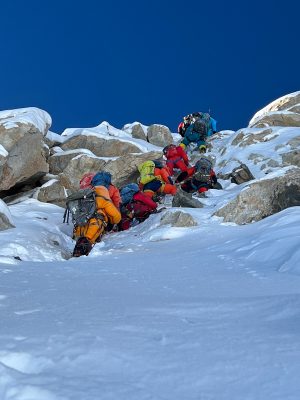
Yes, we face them all the time, I have been caught in avalanches twice with wind speed of 80-85 kmph. Once I was stuck in a snow storm for 8 hours while climbing down Mt Annapurna with wind speed as high as 70-75 km/hr. Once I rescued a girl who was stuck in an avalanche, in another incident, I could not save another mountaineer who died in front of my eyes. Once I had not eaten for five days, I did not have oxygen mask, I made up my mind, I did not want to go back and I completed my trek in 12 hours.
What are your feelings when you reach the summit of any peak?
I close my eyes and remember all the struggles and hardships I have faced to reach here. I can feel the surrounding mountains and peaks peeping through the clouds and admiring me.
What are the life lessons you have learnt from mountaineering?
It has brought in maturity and I see purity in people who are around us. There is no sense of shame, we support and help each other and survive.
What are the techniques and special skills you keep in mind while mountaineering?
The first thing we keep in mind is belief in God. Other than, we use self-arrest technique and ice-axe to save ourselves. We have to be careful that the anchor is set right or not, how to rescue ourselves from a crevice, how to make air pockets on opposite sides, how to fight fatigue, etc.
Would you like to tell something about your coach?

My coach is 37-yr-old high altitude guide Mingma dai Sherpa who has immense will power which keeps me going even in adversity. He had spotted me during an expedition in 2015 when I was climbing Mt Trishool, I didn’t know him then, he came looking for me in 2021, when I was at Mount Everest base camp ready to climb Mt Pumori, since then he has always been my guide.
What is your advice to young mountaineers?
You should know the capability of your mind and body. Its always a wise decision to abort the expedition if needed, you can always climb the same mountain again.
What next?
I have a project named ‘Unexpected’ in mind for which I am looking for sponsors.
Lohri Essential Facts And Recipes You Might Have Heard From Grannies
Lohri marks community reunion after a long spell of winter when people remain confined indoors. With fair weather gradually returning back in the form of spring and harvesting season getting over for farmers, it is the first festival of every new year.
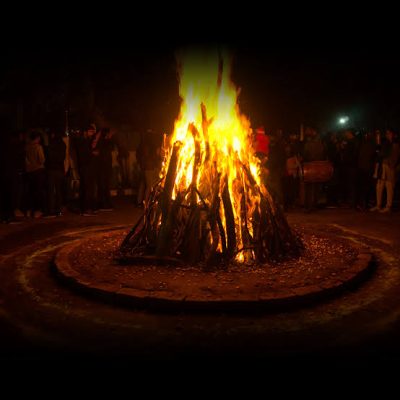
As the sun makes its transition from the Tropic of Capricorn to the Tropic of Cancer, it marks onset of Uttarayan in Hindu mythology, after a prolonged autumn or winter which is referred as Dakshinayan. Here are some essential facts and lohri specific recipes CityWoofer has culled for you:
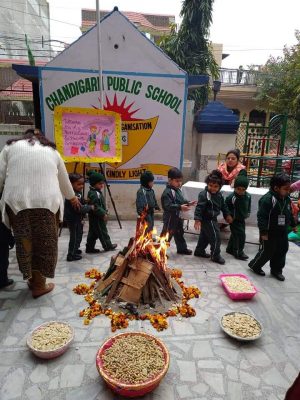
The old waste stock of food grains would be burnt in the geetha (bonfire) on Lohri so that food grains do not come under the feet, pests in the previous harvest do not pass onto the next crop and one doesnot dispose off grains inappropriately.
In Punjab, people shifted from indoors to covered courtyards for sleeping after Lohri till Baisakhi; they would shift to sleeping in the open verandahs after Baisakhi.
After Lohri, people would start consuming milk by-products like curd, lassi which were barred in the winters.
After geetha celebrations, women of the house soaked maash ki daal (urad sabut) overnight which would be cooked early morning next day on Makkar Sakranti in the form of khichri and offer it to their deities before partaking it themselves.
The Multanis who migrated to India during Partition brought the tradition of cooking daal channa khichri, the original Punjabi settlements along the five rivers in Punjab cooked urad daal khichdi.
Novelties in Lohri celebration
Drinking and non-veg cuisine was never a part of Lohri celebrations, but now it is a part of modern culture. Earlier it was a community festival, now people restrict themselves to their select group of friends and family, exchange costly gifts, etc.
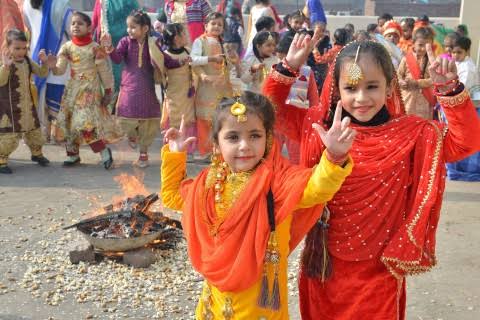
The change for the better is celebrating Lohri as a festival of girl child. In olden days, if a girl would be born around the festival of Lohri, it was not celebrated. Now, a girl child’s first Lohri is celebrated with a lot of fervor, joy and excitement.
Essential recipes of Lohri and Makkar Sakranti
Courtesy: Ritu Khosla, home chef and food blogger
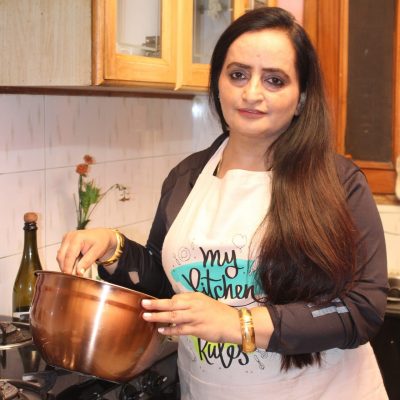
The Makkar Sankranti celebration is not complete without sweets made out of jaggery and sesame seeds and peanuts.
Home-made sweet Til bugga
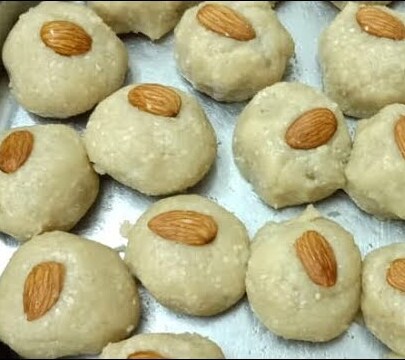
Ingredients:
- Til (White sesame seeds)-1 cup
- Mawa (khoya)-1 cup
- Sugar – 3/4 cup (I like it mildly sweet, you can add more sugar if you like it.)
- Desi ghee- 3/4
- Cardamom powder- 1/4 tsp
Method:
- Dry roast sesame seeds and partially crush them.
- In a kadhai, add ghee and mawa and cook till it is soft and mushy.
- Add powdered sugar and til.
- Throw in cardamom powder and mix well.
- Switch off the heat and make balls of desirable size when the mixture is partially cold.
Sabut Urad Khichdi For Makkar Sankranti
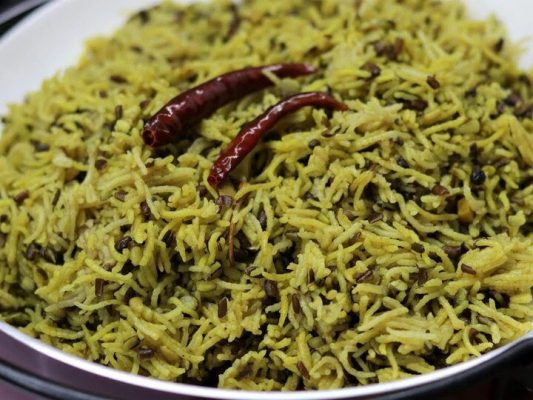
Traditionally, Makkar Sankranti Khichdi is made with 4 parts of rice and 1 part of Urad Sabut. Ghee is an essential part of this khichdi as an abundance of it means prosperity in our culture.
Ingredients:
- Urad Sabut- 1 regular cup (soaked overnight after the Lohri celebration)
- Basmati Rice- 4 cups
- Desi Ghee- Half cup (for Cooking)
- Desi Ghee- Half cup nicely heated (for garnishing)
- Hing – A generous pinch
- Red chili powder -1 tsp or according to your taste buds.
- Salt to taste( approx 2 tsp)
- Green cardamom – 3-4 roughly pounded
- Water to cook-10 cups
Method:
- Heat ghee and add hing (asafoetida).
- Add soaked and drained rice and toss them around for a while.
- Add red chili powder and salt and finally add dal.
- Add 10 cups water and pressure cook for 1 whistle and 15 min on simmer.
- Let the pressure diffuse naturally.
- Serve hot with dollops of hot desi ghee.
National Youth Day: Tricity Young Achievers Make an Indelible Mark
“Youth life is the most precious life. Youth is the best time. The way in which you utilize this period will decide the nature of coming years that lie ahead of you,” the great Indian philosopher Swami Vivekanada had said. Recalling his words on National Youth Day on January 12, we marks the birth anniversary of this great Indian saint Swami Vivekananda who gave a glimpse of the Indian philosophy to the world. He introduced India’s spiritual knowledge to the Western world, delivering lectures across America, England and Europe. It is in this context, CityWoofer brings you a round-up of achievers from the Tricity who made it big in varied fields.
Anjum Moudgil, sports shooter
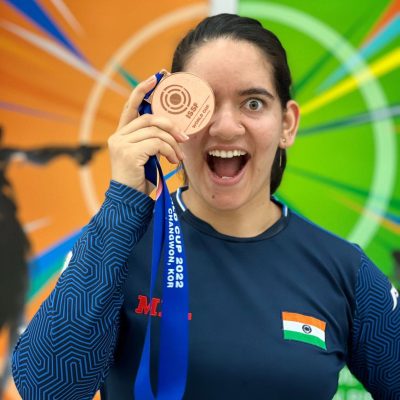
Anjum Moudgil is an ace sports shooter from Chandigarh. She passed out from Sacred Heart Senior Secondary School in Chandigarh after which she graduated in humanities from DAV college, Chandigarh. She did her Masters in sports psychology. She won her first -ever individual international medal at the Asian Airgun Competition in Kuwait in 2014. She has 2 Golds, 5 Silver and 2 Bronze medals to her credit in various events.
Medal list
She holds the World and India Rank No.1 in the 50-Meter 3 position event.
Gold medal in the South Asian Games
Finished 15 in Tokyo Olympics
Silver medal in the women’s 50m Rifle 3 Positions (3P) event at the ISSF World Cup in Mexico
Silver medal at 2018 Commonwealth Games (CWG)
Trishneet Arora, Entrepreneur in cyber security
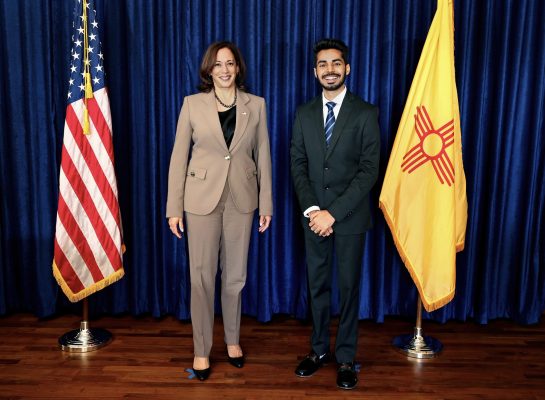
An ethical hacker since his teenage years, Mohali-based Trishneet Arora founded a cyber security company TAC Security in 2013 when he was just 19, A school drop out after he failed in class 8, he is now listed in Forbes 30 Under 30 Asia List in 2018, Fortune 40 Under 40 and GQ’s Top 50 Most Influential Young Indians. His company provides protection to companies against hacking vulnerabilities and data theft, among many other technical solutions. His clients include Reliance Industries, Central Bureau Of Investigation(CBI), Gujarsat Police and Punjab Police among others.
Sambhav Khetarpal, Screenplay writer
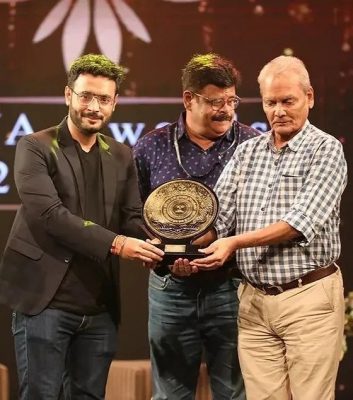
A Panchkula lad, Sambhav Khetarpal is a screenplay writer who recently won the television-best screenplay and television-best story for Sony SAB TV serial Wagle ki duniya –nayee peedhi, naye kisse at the third edition of SWA Awards (Screenwriters Association of India). With roots in Hisar, Haryana, he was brought up in Panchkula. He studied at Hansraj Public School, Sector 5, Panchkula, and did his engineering from Chandigarh Engineering College, Landran. While his parents live in Sector 8, Panchkula, he went on to do his MBA from Mumbai.
Malika Verma, Gold medallist in Mechanical Engineering from PEC
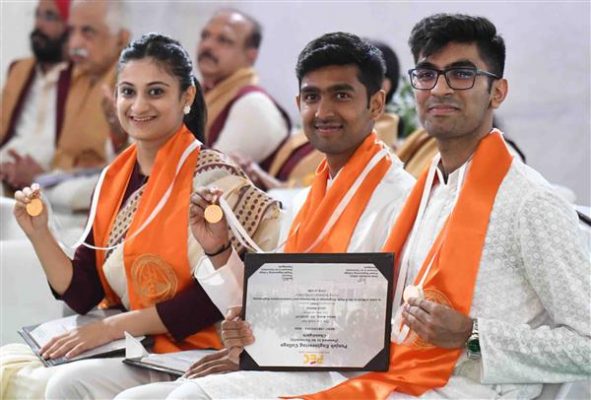
She won a gold medal in Mechanical Engineering after graduating from Punjab Engineering College PEC, Chandigarh, and became the second girl to do so after a gap of more than a quarter of a century. The last time, a girl won it at PEC was in 1996. Interestingly, in a class of 115, she was among the only three girl students doing mechanical engineering.
In 2018, she cracked the IIT-JEE in the first attempt, and got admission in PEC. Always a bright student, she scored 10/10 CGPA in Class X from Doon International School, Sector 69, Mohali. She did her Class XII from Shri Guru Gobind Singh School, Sector 35, Chandigarh.
Amanjot Kaur, Cricketer
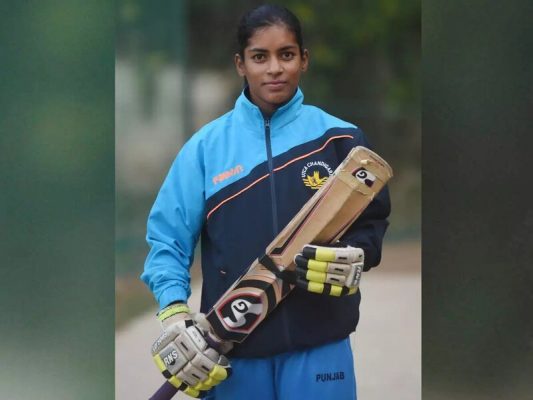
Mohali-based Amanjot Kaur will play for Team India in women’s cricket. The 21-year-old cricketer, daughter of a carpenter, was earlier the captain of Chandigarh team. Initially, she played in under-19 tournaments for Punjab and later she joined the UT team and then again back to Punjab. Amanjot began playing cricket seriously at the age of 15.
Ravina, boxer
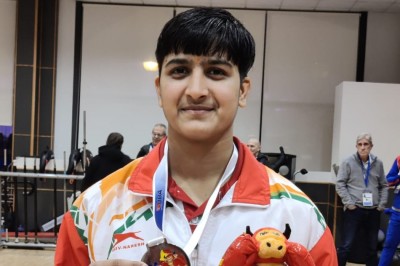
Ravina, a first year student of Guru Gobind Singh College for Women, Sector 26, Chandigarh made the nation proud by winning a Gold medal at the Youth World Boxing Championship 2022, held in Spain. Belonging to Hisar in Haryana, Ravina started boxing in 2018 when she was in IXth standard.
IAF Heritage Centre in Chandigarh, The First of its Kind in India
With the announcement of the date of inauguration of the much-awaited Indian Air Force (IAF) Heritage Centre at the printing press building in Sector 18, Chandigarh, work is going full steam to meet the deadline of January 31. The dream project has already been hit by hurdles and initial hiccups.
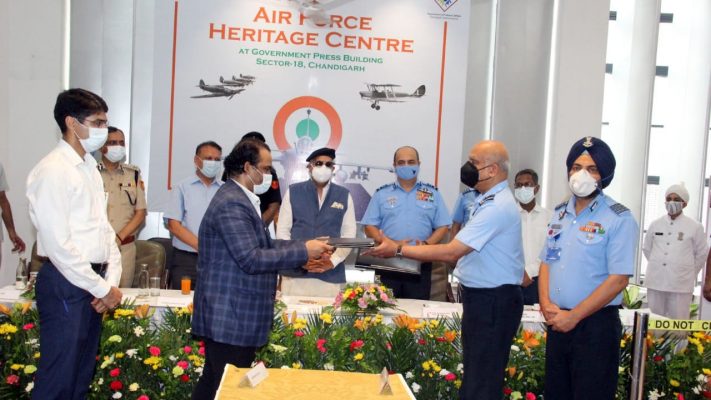
Union Defence Minister Rajnath Singh will inaugurate the Centre on January 31 in the presence of Air Chief Marshal Vivek Ram (VR) Chaudhary, Governor of Punjab and UT Administrator Banwarilal Purohit, among other distinguished guests from political and defence spectrums.
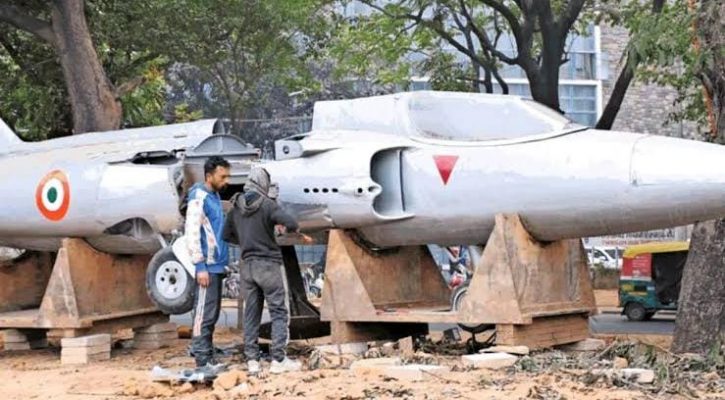
The project was conceived when the UT Administration’s proposal to set up a vintage car museum here had failed to take off. The ball was set rolling on August 27, 2021 when an agreement was signed between the IAF and the UT Administration in the presence of then UT Administrator VP Singh Badnore. This was followed by a MoU inked in June 2022.
Vintage aircrafts on display
The first-of-its-kind heritage centre will have a surfeit of visual attractions for the visiting guests, including five vintage aircrafts and weapons on display at the heritage centre.
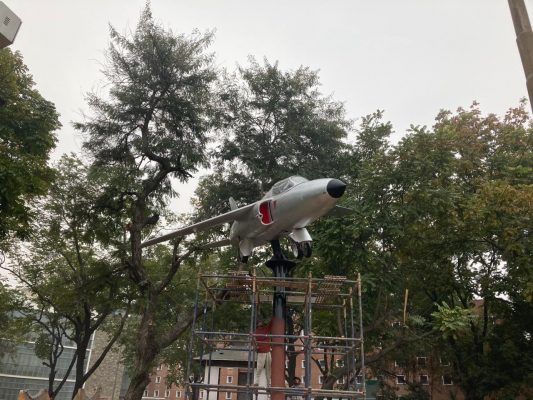
The cynosure of all inquisitive eyes will be its own flight simulator. The 1971-famous GNAT vintage aircraft, which had shot down several Pak’s Sabre aircrafts, and a MiG-27, has since been installed. The fighter aircraft GNAT from the squadron of the lone IAF Parambir Chakra awardee Flying Officer Nirmal Jit Singh Sekhon has been installed at the government printing press building light point.
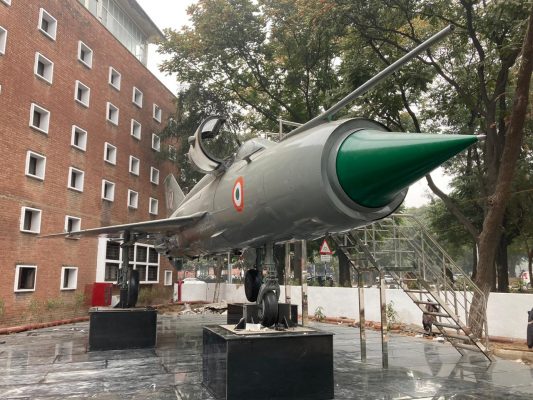
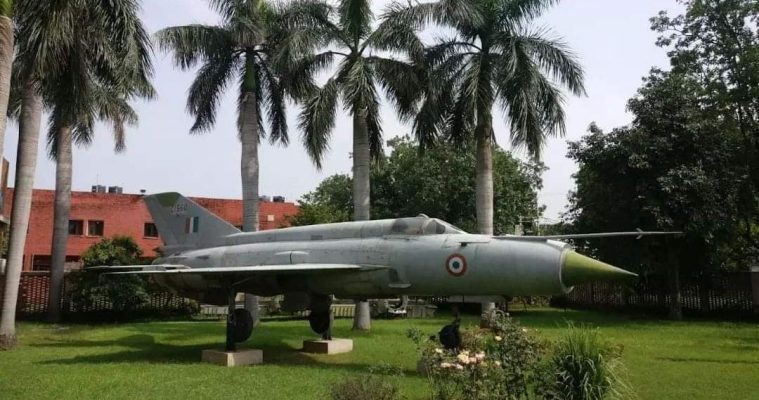
Another vintage machine on public display at the Centre includes MIG-21 fighter aircraft. Installed in the parking zone, the aircraft was added to the existing fleet in 1963. For the unversed, the fighter aircraft had earned a dubious distinction because of its high rate of accidents. However, in February 2019 it was able to ward off its ‘jinxed’ distinction when it helped the force shoot down Pakistani aircraft F-16 and many more thence on.
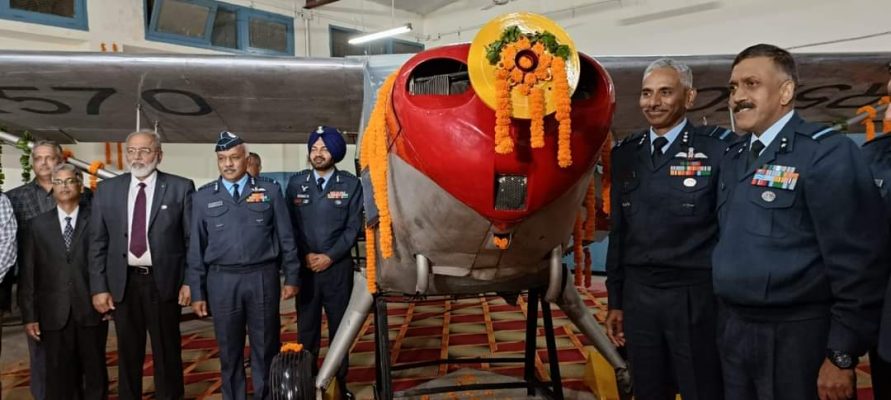
Among a conglomeration of other fighting machines displayed at the heritage site is Kanpur-1 vintage prototype aircraft received by the IAF from Punjab Engineering College, Chandigarh, for display at the Centre. This was the first to have been built by India circa 1951.
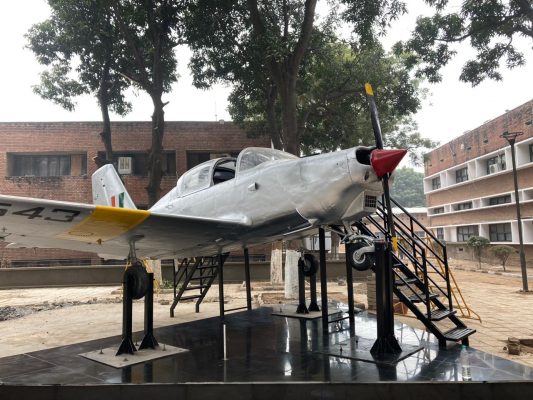
Primary Trainer Aircraft HPT-32
The Primary Trainer Aircraft HPT-32 installed at the sprawling rear lawn of the Centre is yet another showcase at the Centre, which was once used to train young and upcoming flight cadets, the future vanguards of the force.
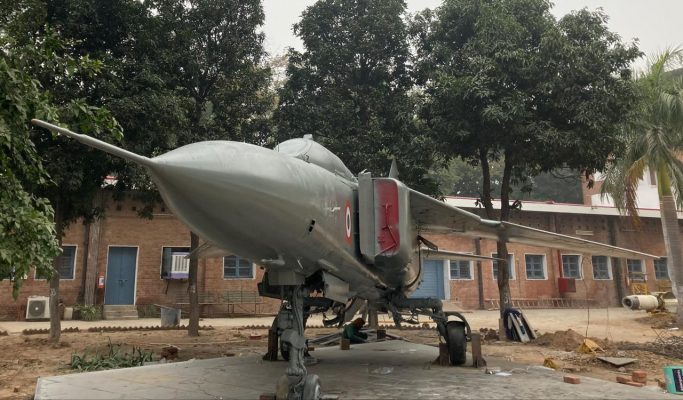
The MIG-23 MF vintage aircraft, a swing wing interceptor, will be another star attraction for those visiting the Centre to know more about the brave men and the machines they commanded. It will be installed at the far end of rear corner of this Mecca for tourists from home and abroad. The vintage aircraft is capable of delivering guided missiles and other weapons during combat operations.
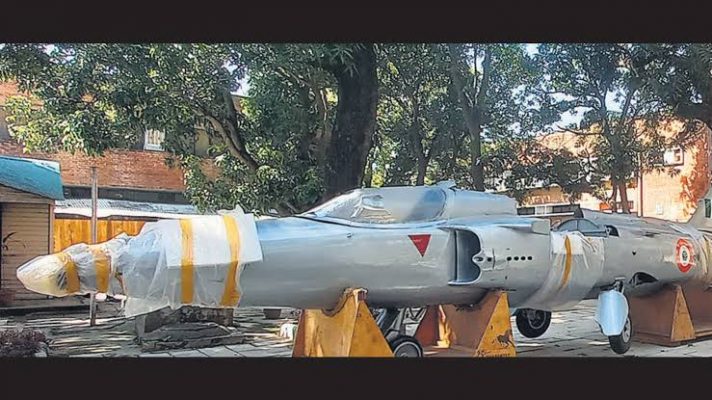
The display of these vintage aircrafts would turn out to be a unique and real time experience for the visiting tourists, especially the younger lot.
Talking to Citywoofer.com, Group Captain Parambeer Singh says “The Heritage Centre will have a rare of the rarest heritage artefacts, including aero engines, fixtures, audio-video films featuring personalities and feats of their heroics, besides their extending succour to the victims of natural catastrophes. A souvenir shop showcasing the memorabilia of the force will also be a part of the landmark museum”
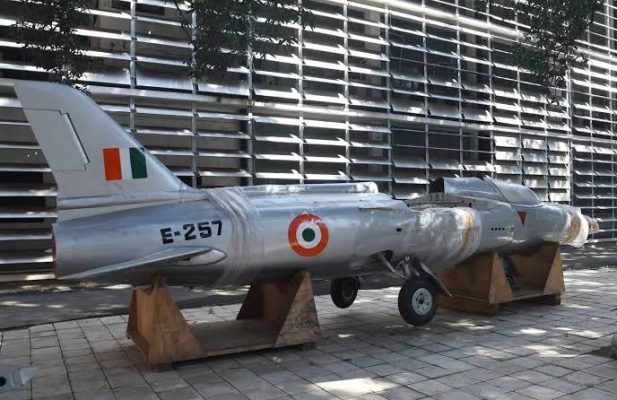
A joint initiative of the Indian Air Force and UT Administration, the upcoming Heritage Centre will not only motivate the youth to join the force, but also strengthen it. The Centre will also offer an opportunity for the visiting guests to have a sneak-peek into the country’s glorious military past.
Haven’t Used SmartBikes in Chandigarh Yet? Travel can’t Get Any Cheaper Than This
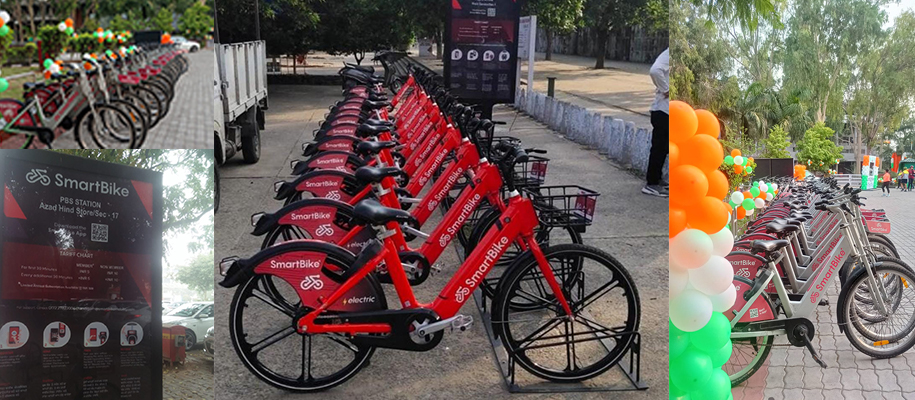
Having noticed the red bicycles you see parked along roadsides in Chandigarh, you might have wondered, can I use this? Of course you can, they are meant for your use at a measly amount of Rs 5/10 + GST. What you need to do is just download the SmartBike Mobility App, keep recharging it and maintain a balance of Rs 150 at all times. Students, working class, women, girls, anybody and everybody can use E–bikes and the push bikes for work, to run for small errands, visit somebody, go to hospital, school, colleges, coaching classes, training institute, to remain fit or just explore the city.
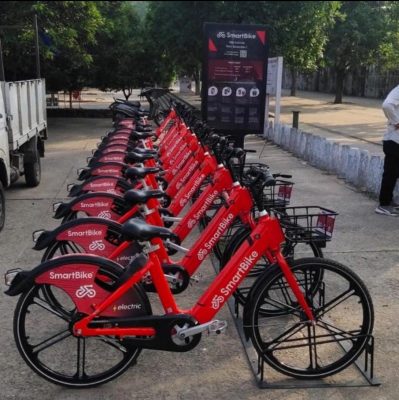
With a total number of 310 docking stations with 2500 bikes, a Hyderabad based company SmartBike Mobility, started this initiative, Cycle for Change, in PPP mode in Chandigarh in 2020 after successfully introducing it in Delhi, Chennai, among other cities. Interestingly, Chandigarh has the largest fleet in India with such a dense network of PBS (public bicycle sharing) stations.
The best part is that 60% of inventory is E-bikes (electric bikes which need charging with the option of paddle incase charging is over) and 40% push bikes (normal cycles).
The project started in 2020, with 100 e-bikes and 125 push bikes. In 2021, 1250 bicycles with 155 new docking stations were added in phase I and similar number were added the next year in 2022 in phase II . Another 155 docking stations with 1250 bicycles will be added to the inventory in January in Phase III of the project which will take the number of bicycles to 3,750 bicycles and 465 docking stations.
How to use them?
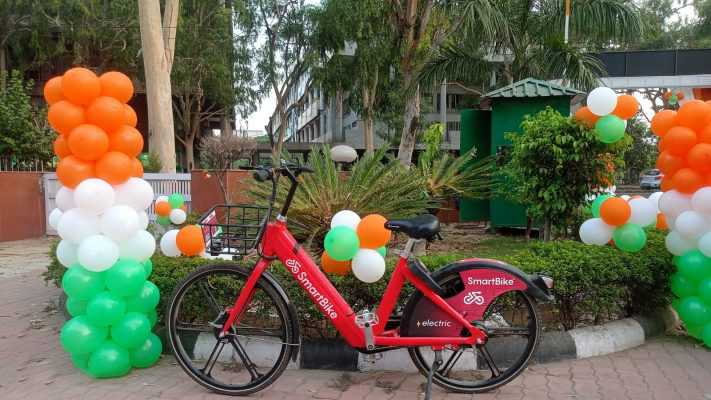
The bicycles can be rented for ₹10 for half an hour and members can rent it for ₹5. One can register as a member for a year by making a one-time payment of ₹500.
In the past one and a half year, more than 2.5 lakh plus users have downloaded the official mobile app to book the bicycles. On average, around 1,200 users ride the bicycles per day, while the number goes up to 2,000 on public holidays and weekends.
City response
There have been 6 lakh + rides in Chandigarh since 2020
There are about 3 lakh registered users
Pain point
There have been about 6,000 plus cases of vandalism regarding 2, 500 bicycles
E bikes vs push bikes
The ratio of use of e-bikes to push bikes is 1:6. “People obviously prefer a more modern version of the bicycle in the form of e-bikes, but the problem is if there is any wear and tear in the E-bikes, the spare parts of electric bikes are not easily available, it takes days for repair work, ” says Vikash Bakshi, City Head, SmartBike Mobility, Chandigarh.
Vandalism, mischief, theft
In countries like US, Canada where these smart bikes operate, people have civic sense. “We though people in Chandigarh are educated, have good traffic sense, so there would be less mischief-mongering,” says Bakshi. Unfortunately, there is vandalism in posh sectors like Sectors 8, 17, 22; southern sectors like 45, 53, and Burail, Kajheri, Nayagaon, Dhanas, Malloya, Dadu Majra
“We are seeking help from the police as the Chandigarh Police can always stop these cycles from reaching Panchkula, Mohali if there is sufficient checking on outpoints,” he adds.
Maintainance of SmartBikes
There is a skilled technical service team which mends the cycles and puts them back
Who uses SmartBikes?
On an average, people in the age group of 15-35 years use these bikes. The users include, school goers, tourist travellers, gig workers, office goers,
Places where smart bikes most commonly used
Sukhna Lake, Rock Garden, Sector 17, Sector 26 sabzi mandi, model schools, Tribune Chowk
Cycles blue-tooth enabled
The users will be able to lock and unlock the cycles via Bluetooth from March 2023 onwards, besides the mobile phone Internet network. All cycles have GPS and it will work through Bluetooth.
Any feedback/ complaint
Log on to chandigarh@smartbikemobility.com
G20 Summit Meetings in Chandigarh, How Well-Prepared are we?
We have all heard that the G20 summit meetings will be held in different cities across India and our very own Chandigarh has got the opportunity to host foreign delegates in City Beautiful.
The final 18th G20 Heads of State and Government Summit will take place on 9th-10th September 2023 in New Delhi. Before that, G20 processes and meetings will be held throughout the year among ministers, senior officials, and civil societies. Chandigarh will be hosting the G20 delegates for the two-day G20 Summit meeting on International Financial Architecture on January 30 and 31, and the second, on agriculture issues, in March. Around 170 delegates from 19 countries, who are multi-lingual and mutli-cultural, will be visiting Chandigarh. Their first interaction with the Tricity will be at the airport for which airport staff is being trained by professionals to handle the foreign visitors.
“We prepared the airport staff in inter-cultural communication, body language and other soft skills,” says Prof Archana R Singh, Department of Mass Communication, Panjab University. 40-50 airport staff personnel were trained from 2nd to 6th January with the help of National Institute of Technical Teachers Training and Research (NITTR), Sector 26, Chandigarh.
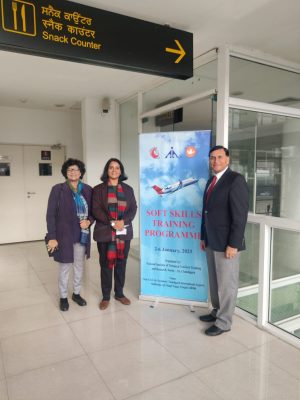
From left to right: Prof Archana R Singh, Department of Mass Communication, Panjab University; Dr Shilpa Das, consultant psychologist and corporate trainer and Pramod Singla, Faculty Incharge, NITTTR Chandigarh
Chandigarh International Airport Limited (CHIAL) engaged NITTTR Chandigarh for five-day soft skills training of their personnel and that of other stakeholders like CISF, different airlines and hospitality staff.
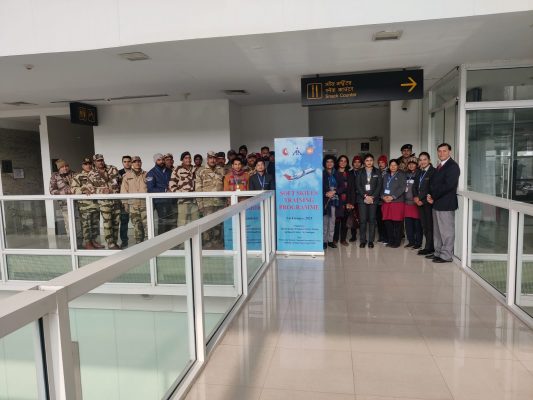
“This training was different from the routine kind of training that I give. We taught the airport staff about how to handle different people who may have a language barrier, cultural barrier, delegates who may be confused in a foreign country and need help,” says Dr Shilpa Das, consultant psychologist and corporate trainer.
What was the training about?
Non-verbal skills
Handling different kind of visitors
Confused visitors
How to keep calm in turmoil
Psychological and emotional help to visitors
Fatigued/angry visitors
Specially–abled people
Sympathy and empathy with foreign/domestic flyers
Police personnel being trained
About 300 police personnel are being trained at the Sector 26 Police Lines recruitment training centre, Chandigarh where they are being taught pick-up lines like hello , welcome to city beautiful, etc in Spanish and French. They have been given a dress code which they will adorn when they are with the delegates — grey blazer with black pants and off white shirt. Sector 42 based Dr Ambedkar Institute of Management is working on this along with the Ministry of External Affairs and Bureau of Police Research and Development.
ALSO READ: CII Chandigarh Suggests Integrated Tourist Circuits, New Tourism Products to Tap G 20 Benefits
Other preparations for G-20 summit in Chandigarh
Beautification of entry points, routes, venues — The small ponds at Rock Garden are being fillled up , small waterfalls are being made , water canals are being cleared off the silt
Landscaping of routes — Area opposite IISER Mohali is being landscaped , where statues depicting Punjabi culture will be installed
Repair and renovations/ painting works of venues/ routes — GMADA has allotted tenders for painting road curves, installing road furniture, repairing and beautifying Airport chowk, plants and flower pots on foot paths.
Mohali MC is beautifying three roads — IISER to chandigarh, sector66/67 dividing road and sohana gurdwara to YPS chowk
Lighting and illumination of venues — Tri-coloured street lights lights on the stretch between Airport chowk and IISER, Sector 81
Where will the delegates stay?
Hotel Lalit, Hotel Hyatt at Industrial Area and Hotel JW Marriot in Sector 35.
72 SUVs and cars have been hired for taking them around the city
What’s in store for G20 delegates?
The delegates will be given a tour of the Sukhna Lake and the Rock Garden. Cultural performances will be held in the evenings while a dinner has been planned at the Lake Club. The meetings will be held at The Lalit hotel from 10 am – 6 pm.
Kalagram Reverbates With Dogri Folk Dances of Jammu to Mark Lohri Celebrations
Lohri, the first festival of the new year 2023, is knocking at our doors again. Preparations and festivities have already begun as we get ready to bid adieu to the harsh winters and welcome the onset of spring with farmers finishing their harvesting.
The Jammu and Kashmir Dogra Sahba along with North Zone Cultural Centre (NZCC), Ministry of Culture, took the lead in celebrating the most important festival of north India at Kalagram. A troupe of professional folk dancers and folk singers led by Om Prakash, a household name in the region, presented the region’s most popular dance form of Jammu, Geetru, which turned out to be the showstopper performance of the well-attended Lohri celebrations.
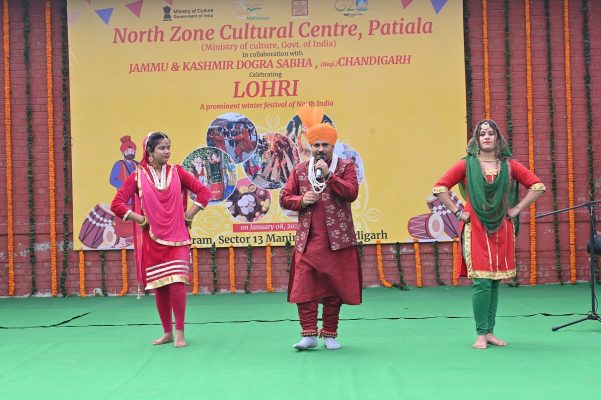
The vibrant dance is performed by both male and female artistes amid the strains of folk musical instruments, including dhol, chimta,bansuri, khanjari and harmonium, creating a typical musical metaphor.
The presentation Haran in local dialect, a prominent folk dance performed on Lohri, brought the poignant tale of Ravana and the elusive hiran (deer) that had enticed Sita, ending up in her kidnapping by Ravana.
Jagranna, another popular folk dance of Jammu, evoked thunderous applause from the cheering crowd.
The sprawling Kalagram open air theatre reverberated with the fascinating folk tunes of Jammu, the land of the spirited dogras. Scintillating folk dances and folk songs of the region presented by prominent artistes in the typical dogri folk tradition kept the audience hooked for hours.
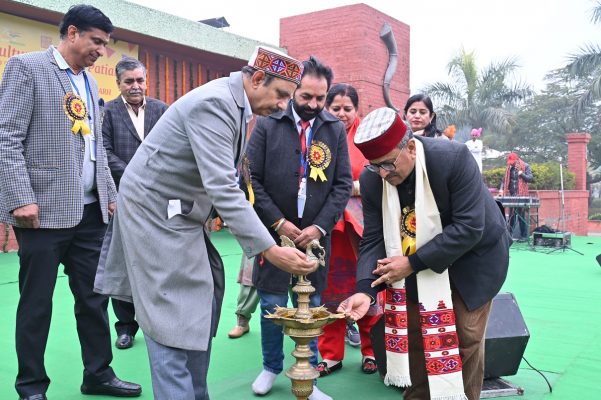
The former deputy chief minister of Jammu and Kashmir, Dr Nirmal Singh, who was the chief guest on the occasion, formally inaugurated the mega event by lighting the traditional lamp.
An organ donation camp under the supervision of a team of experts from PGIMER was also held to sensitise people on the great humanitarian gesture of saving lives.
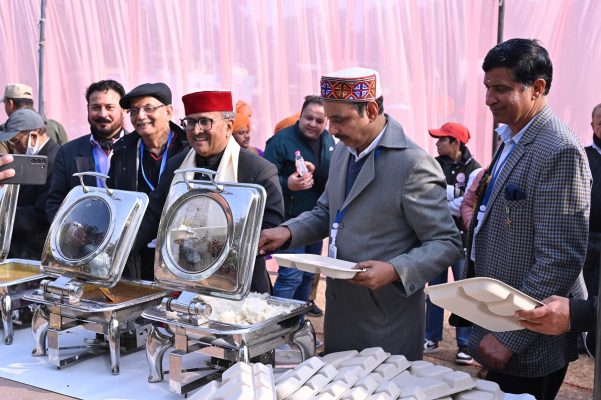
The celebrations culminated with the lighting of the bonfire and distribution of‘gachak-revri-moongfli followed by a community kitchen offering a fare of typical dogri cuisines that the foodies relished to their heart’s content.
The Sabha President, S K Sharma, presented a vote of thanks to the guests present on the occasion.